Walk right into any type of home where an individual with disabilities is obtaining the best support, and you can feel the distinction. The atmosphere operates on silent regimens and considerate discussion. Medicines are dealt with without fuss. Dishes mirror tastes, not just nutrition labels. Someone is practicing for a bus course or intending a weekend break bowling organization. That pulse of daily life frequently comes from a Direct Support Professional, the individual who assists transform goals into routines and independence into something tangible.
The title seems professional. The work is anything but. A Direct Support Professional, or DSP, is the stable presence assisting children and adults with intellectual and developmental disabilities, autism, mind injuries, or complicated medical requirements to live the lives they pick. The variety of tasks is broad, yet the heartbeat is consistent: self-respect, safety, and self-direction.
"Straight support" in practice
The clearest method to recognize the duty is to visualize a common day. DSPs do not just appear and carry out a checklist, since the work orbits around an actual individual whose needs and preferences shift.
At 7:00 a.m., you may aid someone with an early morning routine, from moving safely out of bed to preparing a recommended breakfast. You support their freedom, which usually means training, not doing. If an individual wishes to make eggs however battles with stovetop safety, you could demonstrate a heat-safe grip, established an aesthetic timer, and identify them as they turn a scramble. When the bus comes, you inspect that they have the appropriate key ring and a billed phone, then evaluate a social tale about what to do if the bus is late.
By midday, the focus shifts. Possibly it's community employment: you exercise stocking shelves promptly and nicely, then role-play how to ask a supervisor for a new job. Later, you evaluate a budget plan app, discuss saving for a journey, and established automatic informs for low equilibriums. Evenings are frequently concerning pals, leisure activities, and rest, with a lot of micro-decisions along the way. Do we attempt the new coffee shop? Is it on an available route? What will help in reducing anxiousness in a loud setting? You're continuously changing, not just responding.
What does not change is the classification behind the scenes. DSPs work in team homes, sustained houses, household homes, day programs, schools, and work environments. Some are company staff members, others are hired straight by families making use of self-directed funding. The task names vary by state and country, but the core capability remains recognizably the same.
Skill, judgment, and the art of the middle
The public often underestimates the competence included. A great DSP reviews a scenario swiftly and acts in the space in between too much assistance and not enough. You understand when to step back so someone can take the lead, and when to jump in to avoid harm or a setback that might sour confidence for weeks.
That harmonizing act shows up anywhere. Prompting is a fine example. Overprompt and you produce found out helplessness. Underprompt and you risk failing and aggravation. The pleasant spot specifies and specific: an aesthetic list for one person, a motion-sensitive reminder or solitary verbal sign for an additional. You test and improve, maintaining data gently however regularly so the plan grows with the person.
Risk tolerance is one more location where judgment matters. Person-centered solutions don't remove danger, they manage it. People that never take dangers don't acquire self-reliance. Yet unmanaged risk can endanger health and wellness or lawful conformity. A skilled DSP knows how to talk via selections without guiding them unjustly, and how to record the end result so the team can change supports. You'll hear expressions like self-respect of danger and positive risk-taking for a reason.
Health and security are never on autopilot
The gentler parts of the task hinge on a sturdy foundation of health and wellness skills. Depending on training and neighborhood law, a Direct Support Professional may provide medications, track seizure task, handle insulin and blood sugar checks, or use mechanical lifts for risk-free transfers. It's inadequate to know the procedure. You expect patterns and tiny discrepancies that might signal difficulty: a new tremor, an adjustment in hunger, the beginning of skin malfunction, or a change in rest that often precedes behavioral spikes.
Incident reaction drills repeat for a factor. Fire protocols, elopement avoidance, choking response, and emergency emptying plans save lives. The most effective DSPs understand each person's certain risks and the environmental tweaks that lower them, from adaptive tools to clearly labeled closets to the careful positioning of furnishings for wheelchair clearance. The job is hands-on and constant.
A short story from the field: a female in her thirties, nonverbal and susceptible to unexpected decrease in blood pressure, began leaving sections of dishes unblemished. Staff noted it as choice. A Direct Support Professional that recognized her well observed she preferred soft foods that week and recoiled a little while eating. A call to the registered nurse, an oral see, and a cracked molar clarified whatever. Without that observation, the scenario could have drifted into weight reduction and a lot more complicated clinical problems. Listening is not a soft skill, it's a clinical one.
Communication is the core technology
DSPs are translators as long as helpers. When somebody has limited speech, communication becomes a split skill. You might utilize image exchange systems, text-to-speech applications, social tales, or customized signs. Despite fluent audio speakers, the actual work often entails translating anxiousness, sensory needs, or trauma triggers. A meltdown in a grocery store isn't arbitrary. Possibly the fluorescent lights are frustrating, the store repositioned racks, or a cashier rushed the checkout. A Direct Support Professional develops a psychological map of those variables and helps the individual advocate for adjustments that work.
Documentation sits beside interaction. Day-to-day notes aren't journals, they're a method to share critical details throughout changes and with treatment teams. They reveal what interventions functioned, what didn't, and where to experiment following. Great documentation prevents labeling or blame, stays with observable facts, and links to objectives that the individual has actually chosen. If a goal is "prepare supper independently twice a week," a note may record that a new slicing board with an edge guard sped points up by 3 minutes and minimized disappointment. That information issues when you're determining what to buy or train next.
The culture of choice
Person-centered preparation can seem like a buzzword until you collaborate with it day in day out. The concept is basic: the individual's choices assist the assistances. In method, it calls for systems. You produce means for people to make real choices, not simply approve what's simplest for team or budget plan. That might suggest altering shifts to sustain an evening art course as opposed to a daytime program, or holding company when a well-meaning family member wants to override an adult's preference.
Choice doesn't indicate an open area with no borders. Laws, moneying guidelines, and security considerations attract lines. A Direct Support Professional lives inside those constraints while still broadening the space for freedom. You damage down big choices right into doable actions. Someone that wishes to cope with a flatmate may begin with weekend overnights, then a test sublet, after that a lease with backup personnel assistance. Each stage teaches something concerning noise resistance, duty sharing, and conflict resolution. The course is seldom directly, which is fine. Development paced by the individual is the entire point.
Relationships that appreciate adulthood
One of the hardest shifts for new personnel is relocating from a caregiving attitude to a partnership model. Grownups want adult lives. That consists of the right to hang around with pals and partners, privacy in their rooms, and discernment around personal matters. A Direct Support Professional aids establish limits and sustains healthy and balanced connections without becoming a gatekeeper.
Consider dating. Supporting somebody to utilize a dating app securely needs clear conversations, role-play, and agreed-upon check-ins. You show exactly how to find scams, just how to state no, and what a considerate message looks like. You additionally value discretion and adulthood. If a relationship ends up being undesirable, you trigger a safety strategy and loopholes in the circle of support as agreed. The bedrock is trust.
Behavior sustains without punishment
When behavior support is succeeded, it feels like atmosphere style, not control. You try to find the unmet requirement behind the habits. Sensory overload, pain, monotony, and interaction barriers drive lots of events. A Direct Support Professional collects data on antecedents and results, then makes use of basic modifications to lower triggers: offer noise-canceling headphones at particular times, swap fluorescent bulbs for warmer light, build predictable changes with countdown timers, or schedule heavy job like bring grocery stores before a job that calls for focus.
Restraints and restrictive interventions sit at the much side of technique and need to be unusual, time-limited, and controlled by stringent regulations. A lot of crises can be prevented or softened with early signals and encouraging coaching. The existence of a relied on DSP frequently de-escalates a situation much faster than any type of technique because the connection is currently strong.
Work and discovering: the engine of independence
Employment services vary commonly, from tailored task sculpting to on-the-job coaching and follow-along supports. A DSP that enjoys the globe of job comes to be a powerful ally. You speak with companies to form jobs around staminas, not deficits. You develop all-natural supports so the individual depends less on staff in time and more on colleagues with clear duties. You established transparent assumptions and celebrate genuine productivity, not box-checking.
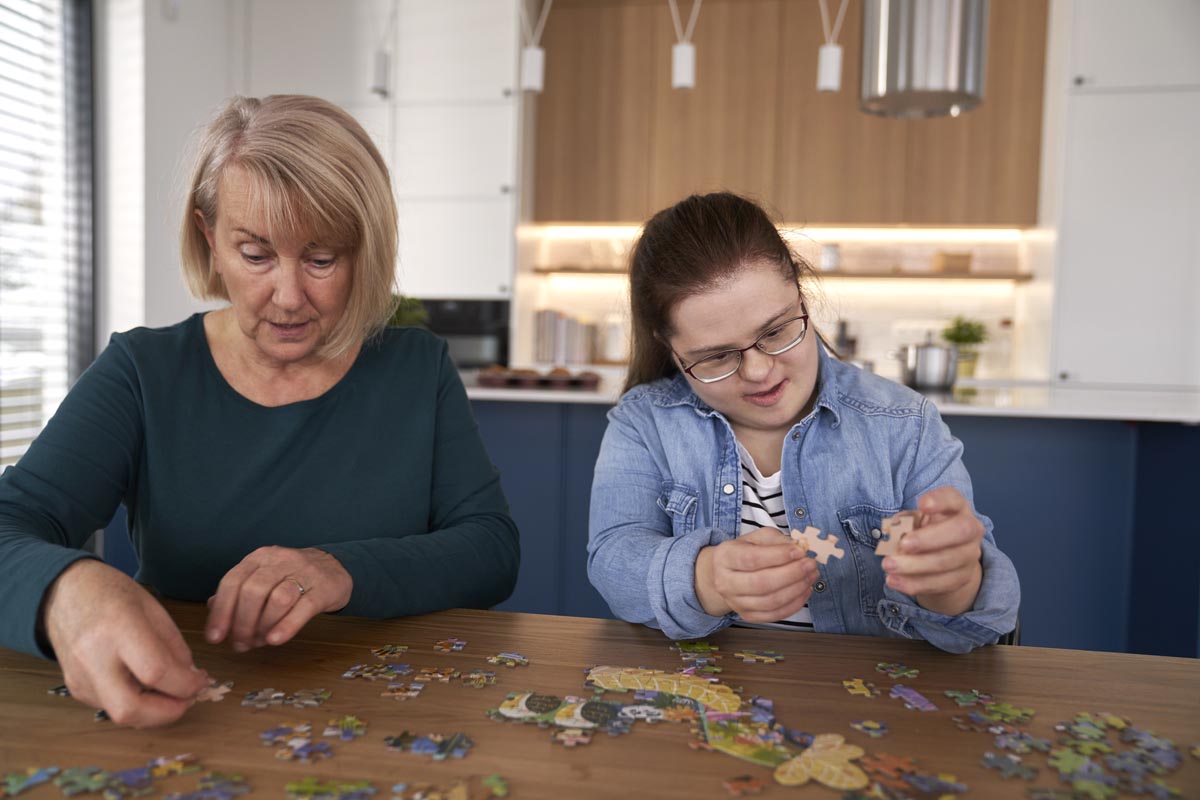
Learning does not stop at school. Numerous grownups need functional instruction on points that others soak up with osmosis: checking out expenses, utilizing public transit, planning meals for the week. The trick is to teach in context. A lesson on budgeting sticks when it's tied to saving for a performance next month. Traveling training is simpler when the destination issues. The end result isn't independence for its very own benefit, it's freedom of choice.
The household and the team
Families bring history, instinct, and a deep sense of what jobs. They can additionally lug easy to understand fear, particularly when past systems have failed them. A Direct Support Professional acknowledges both. You interact clearly, honor experience, and set collective regimens. That might appear like a regular monthly call that concentrates on progression and decisions, not just problems, or a shared nourishment plan that values cultural food practices.
The group extends beyond family members: nurses, occupational therapists, speech-language pathologists, situation managers, and sometimes guardians. Each has a piece of the problem. The DSP's function frequently consists of coordinating timetables, sharing observations, and advocating for adjustments when the present plan isn't landing. The individual getting services sits at the facility, not at the edge.
The business economics nobody need to ignore
Compensation for DSPs stays a chronic problem. Incomes in several areas hover just above retail and food service prices, despite the intricacy and obligation entailed. Low pay drives turn over, and turnover hurts individuals receiving solutions. Relationships reset, training voids broaden, and tiny yet crucial information obtain lost.
States and provinces that have actually invested in wage boosts and job ladders tend to see improved retention. The mathematics is uncomplicated: constant staff deliver better outcomes. Fewer occurrences suggest lower health care costs and much less disruption. Steady groups construct depend on, which after that accelerates skill-building and independence. When policymakers speak about value-based treatment, this is what it resembles in handicap services.
Training that in fact sticks
Check-the-box training wastes everyone's time. Reliable prep work blends classroom web content with side-by-side mentoring and practical scenarios. New DSPs require to exercise risk-free transfers with a real lift and an individual fitness instructor, not simply see a video. They need to role-play challenging discussions, practice paperwork that passes audits, and darkness experienced staff with a full day, consisting of the messy parts.
Continuing education matters just as much. For example, a one-hour update on existing best methods for supporting autistic grownups in sensory-intensive setups can immediately enhance getaways, reduce rises, and open new community alternatives. Brief refresher courses on medication changes, seizure emergency treatment, or diabetic issues monitoring protect against mistakes. The best programs invest direct support professional in peer mentors and occupation pathways. Individuals stay when they can grow.
Technology aids, yet it's not the point
Tools can expand what a Direct Support Professional can do, as long as they boost, not change, human assistance. Wearable devices can prompt hydration or activity. Smart home technology can automate lights, pointers, and door sensors for safety and security. Communication apps provide voice to people who kind, faucet, or use eye stare. Video clip modeling can educate a multi-step job much faster than verbal explanations.
The limitation shows up fast if technology comes to be the plan as opposed to a support. A reminder application is only valuable if the person understands it, desires it, and can manage it. Tool tiredness is actual. The very best strategy is to pilot, collect feedback, and keep what the individual suches as and utilizes. After that check back in 6 months, because needs and choices shift.
What excellent looks like
It's much easier to spot the lack of top quality than its presence. But after some years in the area, you observe trademarks of strong support.
- People established their own goals, and those objectives turn up in the daily routine in noticeable ways. Staff know choices without looking them up and can discuss why an approach benefits he or she, not simply why it's required. Safety methods are lived habits, not last-minute scrambles. Community links are real: colleagues understand the individual's name, local organizations welcome them, next-door neighbors conversation in the hallway. Turnover is low sufficient that birthdays and anniversaries have connection, and progression doesn't reset.
These indicators aren't additional debt. They're indicators that the structure is audio and the person's life is relocating the instructions they chose.
Edge instances and real-world trade-offs
Resources are limited. Schedules clash, transport falls through, and a wintertime tornado can undo a week's strategy in a mid-day. A Direct Support Professional discovers to triage without skipping to "no." If the art class is canceled since the mobility device van remains in upkeep, possibly you established a makeshift studio in your home and livestream a lesson. It isn't the same, yet it honors the intent and maintains momentum.
Another usual tension rests in between personal privacy and oversight. Grownups deserve exclusive time. Agencies need to guarantee security. You craft agreements with the individual concerning when to sign in, exactly how to utilize door sensors appropriately, and what counts as an emergency. Composed strategies aid, however trust and connection do the hefty lifting.
Then there are grey zones. Expect someone wants a tattoo and has the funds, but family members things. The individual is an adult with choice legal rights, yet you prepare for backlash. You slow down, talk about layout and placement, review hygiene techniques and reliable studios, and set a date. You additionally get ready for sincere family members discussion. Regard runs in both directions.
The stakes are personal
A man I sustained years ago intended to grasp the city bus so he can visit his sibling without organizing around staff changes. The very first effort finished terribly: missed quit, climbing panic, and a telephone call that came with garbled. We reconstructed the strategy. We exercised checking out landmarks, made use of a general practitioner with vibration alerts, and arranged for the brother to fulfill him at the quit the very first couple of times. It took a month, Have a peek here with two advances and one back. The day he made the trip solo, his smile stated greater than any kind of care plan could. The next week he asked if we could map a route to the stadium.
That is the job. It's not glamorous. It requires perseverance, humor, and a desire to be both careful and flexible. It will certainly extend your analytical and your capability for compassion. It will certainly also hand you moments of real satisfaction when a person asserts an item of their life that once really felt out of reach.
How to select and sustain a terrific DSP
Families and self-advocates regularly ask what to look for and just how to be excellent partners. A short, useful guide helps.
- Look for interest, not simply qualifications. Ask candidates to define a time they adjusted a plan when it had not been functioning and what they learned. Ask concerning limits and grown-up dignity. Pay attention for language that values choice, not conformity for its own sake. Check for details skills that match needs: transfers, interaction approaches, seizure protocols, or work supports. Clarify assumptions early. Routines, documents criteria, interaction choices, and decision legal rights should be explicit. Pay attention to the suit. Shared rate of interests and compatible power degrees matter as much as schedules.
Once the connection starts, feed it. Offer comments that is timely and particular. Share context that makes success more probable. Notice and recognize great. The individual sustained will certainly really feel the difference.
Why this job issues, past the job title
Direct Support Professionals hold with each other a vital piece of our social textile. They make it feasible for people with handicaps to live in their own homes, contribute via work, connect with buddies, and take part in neighborhoods that benefit from their existence. The return is not abstract. When individuals have the right support, emergency clinic sees decline, psychological situations decrease, police encounters decrease, and lasting institutional placements come to be unnecessary. Neighborhoods become more inclusive and fascinating. Offices gain devoted employees and problem-solvers who understand exactly how to adapt.
If you are considering this field, recognize that it will ask a lot and give a lot back. If you are employing or handling DSPs, purchase salaries, training, and respect. If you are a policymaker, put continual funding behind the rhetoric of neighborhood living. And if you are a person getting services or a member of the family, demand a collaboration where voice and choice are real.
The title might review Direct Support Professional, but the work is human to human. It flourishes on patience and sensible wisdom, on mindful monitoring and shared laughter. Most of all, it flourishes on the belief that everyone should have a life that looks like their very own, not someone else's idea of one. That idea, accomplished in the common details of morning meal, bus paths, paychecks, and Friday night plans, changes everything.